When should my baby be crawling?
Does crawling matter? Is crawling important?
Although the American Academy of Pediatrics did remove crawling as a developmental milestone, pediatric physical and occupational therapists do still consider this a very important milestone, and not to be skipped.
If your child skips crawling, it is highly correlated with long term deficits such as hand-eye coordination deficiencies that would impact abilities to participate in sports; shoulder/wrist/finger weakness required to manipulate bottle caps, door handles, and pencils; learning disabilities; delayed bilateral coordination for activities like riding a bike or rowing; retained primitive reflexes, meaning children are moving in pre-conditioned patterns as opposed to voluntary movements, which can cause extreme safety concerns with activities like driving.
On the contrary, by crawling, the benefits they experience are opposite all of these deficits listed above, in addition to deepening the hip sockets and enhancing their core strength, preparing them to safely stand and walk.
When should my baby start crawling? At what age should I expect the crawling milestone?
If you’re a parent of an infant, who is between 7-9 months of age, you should start to expect them to crawl soon. Maybe you’ve noticed that they are wanting to explore more of their surroundings, and they’re shifting from sitting still to being on the go; your sign to start to want to put up the baby gates and child-proof locks and gadgets. When you take your eyes away for even 2 seconds, or it starts to get quiet, your baby may already be getting into mischief.
The number one precursor/ primary gross motor milestone materered prior to crawling is tolerating, and mastering, tummy time. Tummy time is the foundation for mobility for humans, and without exposure to it, children are often less prepared to transition into crawling. They may instead opt to butt scoot or roll.
Is it normal if my baby skips crawling?
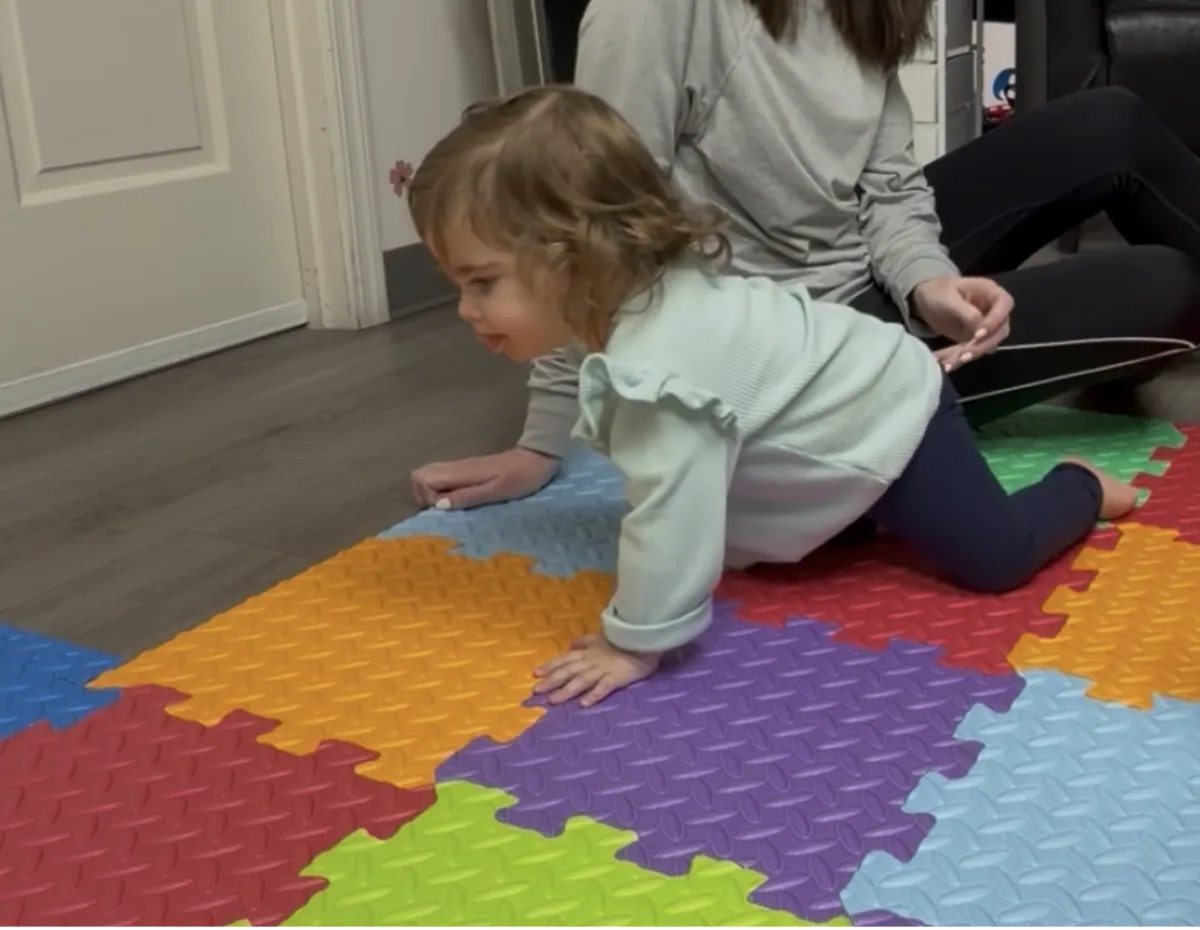
It is not normal for your baby to skip crawling. If you're noticing that your baby prefers to swivel on their butt, butt scoot, or roll instead of crawl, you should schedule them for a pediatric physical therapy evaluation to advance their mobility and gross motor milestones.
Is crawling required?
Do babies have to crawl? Although crawling is not 'required' per se, a lack of crawling will lead to other deficits and frustrations. If your baby skips crawling, these other symptoms are highly correlated: delayed exploration and understanding of their environment, immature play skills, impaired social-emotional development, poor body awareness, weak core, hip shoulder, hand and wrist strength, delayed visual motor skilled, delayed bilateral coordination skills, and retained primitive reflexes. This will often lead to difficulties in the academic setting and require intervention from a physical or occupational therapist later on, and your child starts to feel 'different' than their peers.
Is my baby considered delayed if they aren’t crawling by a certain time?
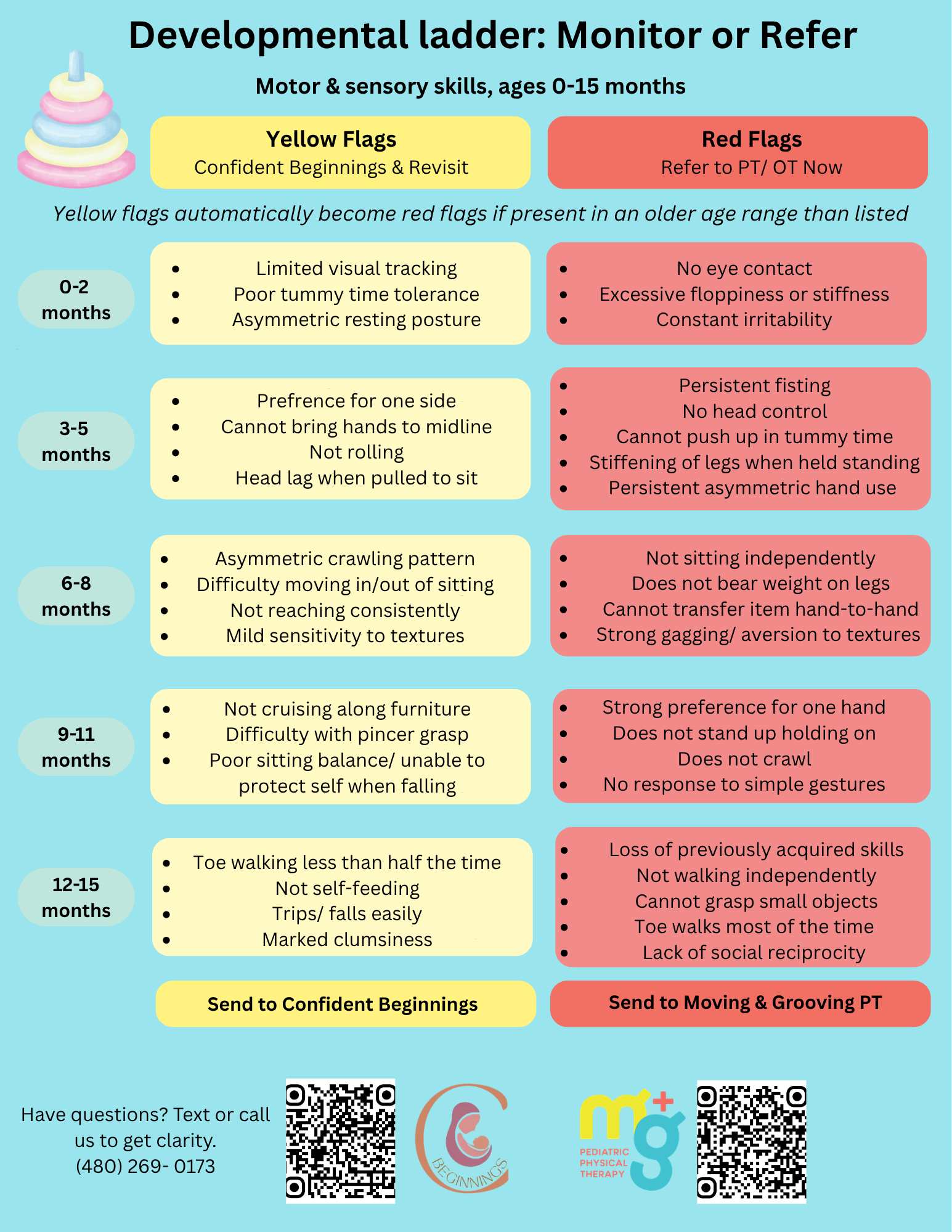
In terms of pediatric physical and occupational therapy, we do still consider hands and knees crawling a developmental milestone, and expect for hands and knees crawling to be occurring consistently by 7-8 months of age. If your baby is 8-9 months old and still not crawling, there may be a few basic changes you can make to their play setup to help them.
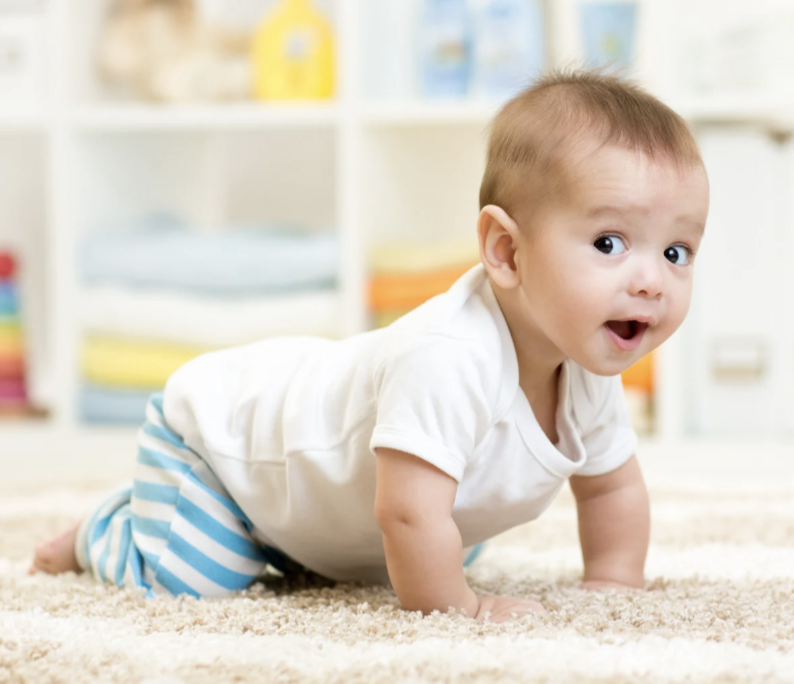
If you’re a parent in Scottsdale, AZ wondering “why isn’t my baby crawling?” or “ Is there anything I can do to help my baby crawl?” Here are some tips for you to try before scheduling a pediatric physical therapy evaluation!
Often times, babies aren’t meeting their developmental milestones due to their environment. They may not have models demonstrating said milestone, or they may want to work smarter, not harder, and have found a more efficient or effective way to accomplish said task.
In many cases, there are simple adjustments to implement to the way your baby’s play space is set up in order to encourage crawling. The number one mistake we see parents make when their baby isn’t crawling is that they have all of their toys on the floor. Other common concerns are that all toys are within reach, or family members are handing them what they want, so there is no reason for them to crawl. From a young age, humans learn to work smarter, not harder, and realize that if there is a way to get an outcome faster and without as much effort, why do something different?
Is there one right way for a baby to crawl, or is it ok if they explore one leg crawling or if they (butt) scoot instead of crawl?
Rather than focusing on polarities like ‘good and bad’ or ‘right and wrong’, in pediatric physical therapy, we focus on improving the quality of the movement, and what can be improved or enhanced, and what we want to limit. When considering infant development and baby milestones, we want children to show symmetry with which side of their body they use until they are between 2-3 years old; they generally don’t show dominance consistently until 5-6 years old. This is because both sides of their body are needed to move safely and freely, manipulate toys, and catch themselves when they experience a loss of balance or a fall.
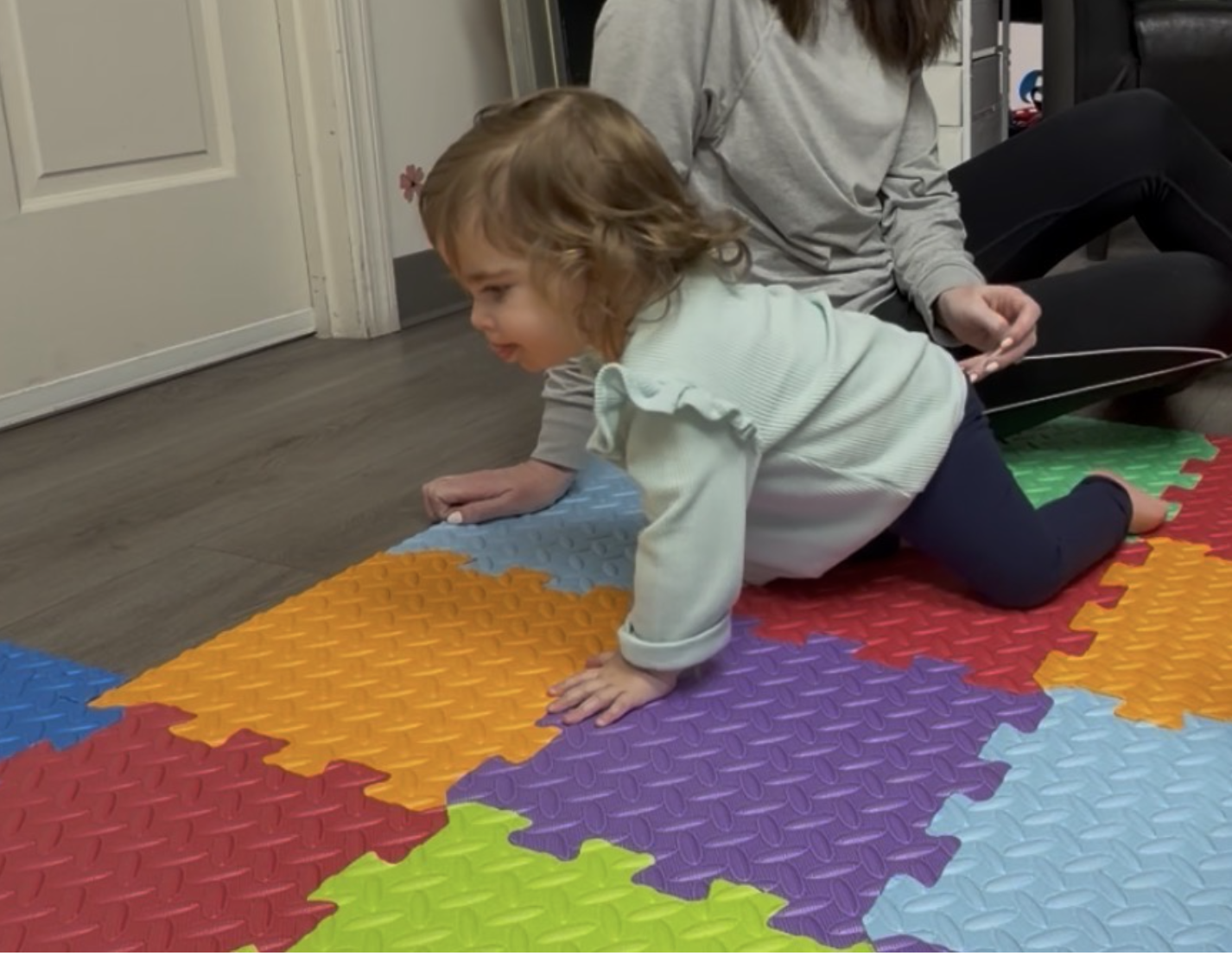
In pediatric physical therapy, we would like to see your baby easily move in and out of any and all positions in any direction, and demonstrate no signs of discomfort or asymmetry. If you’re noticing that your baby skipped crawling, or your baby isn’t crawling evenly on hands and knees between 8-9 months of age, set up a pediatric physical therapy evaluation with us!
If you’re curious about other concerns or red flags that could indicate your baby or toddler is falling behind, and to learn what they could be doing to indicate they are on track, be sure to check out our Yellow vs. Red Flags handout below!