Hitch Crawling
Help! My baby is crawling with one leg out to the side, and I don’t know what to do. Is this normal?
What is a ‘hitch crawl’ & hitch crawling normal?
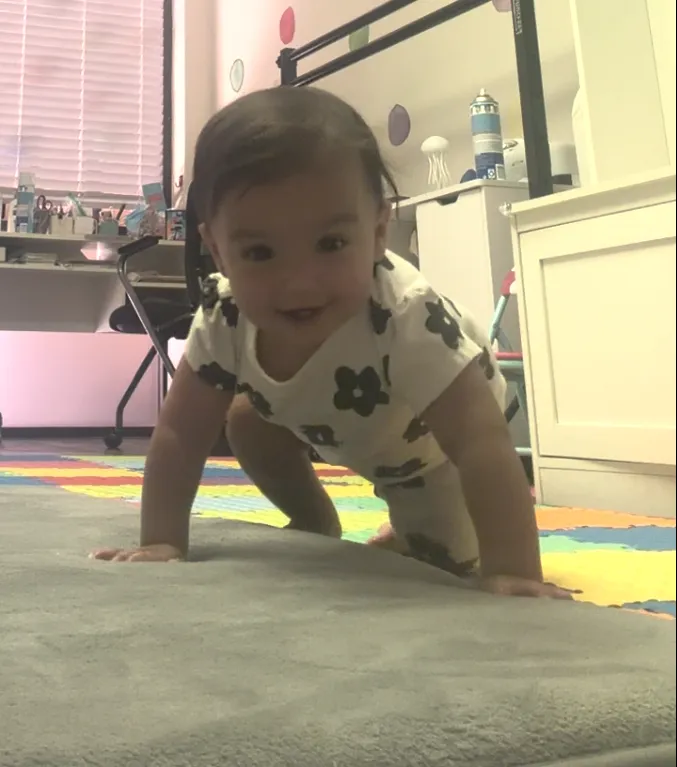
A hitch crawl, one leg crawl, crawling with one leg out, 3 point crawl, or tripod crawl, is a type of asymmetrical crawl we sometimes see in infants. It is defined as baby crawling on both hands and one knee, with the other foot in contact where the knee would typically be placed. It could even be described as a baby dragging one leg crawling. Trying new things, and how to move, is normal. If your child is experimenting with different ways of movement and crawling, simply monitoring this habit is sufficient until your child's next well check.
What should I do if my baby is hitch crawling? Is hitch crawling bad?
If you're noticing they are choosing this method at least half of the time to move around, it's time to schedule a pediatric physical therapy evaluation.
Schedule your child for a pediatric physical therapy evaluation if they are hitch crawling, particularly with just one side, in order to prevent future discomfort or gross delays; waiting can caused increased strain and discomfort for them as they age.
What causes my baby to hitch crawl? Did I do something wrong?
Babies may use this type of crawl because it is fast, or because they have limited strength or mobility.
Hitch crawling is often seen in babies who have pre-existing asymmetries, or side preferences. It is generally seen in babies who had/have a preference to look or tilt their head in one direction, also known as torticollis. It’s also commonly seen in children with hypertonia (having high muscle tone), or are referred to as tight or tense (we have a blog on hypertonia) It’s also seen in children who have ties or tethers (think tongue or lip ties), or have a tendency to stand or walk on their tiptoes.
What happens if I don’t correct my baby hitch crawling, and they never learn how to crawl ‘normal’?
A child who crawled with a ‘hitch crawl’ has more of these visible effects as they learn more advanced skills after standing, leading to gross motor delay or asymmetries. You may notice that a baby who hitch crawled previously stands, walks or runs with one leg/knee/foot rotated outward in an externally rotated posture. Or perhaps they sit on one foot with the other leg rotated out and can’t move into any other sitting positions. They may struggle with more advanced gross motor skills or coordinated activities, such as balancing on one foot, jumping, skipping, using stairs, dancing or riding a bike or scooter. Sports like skiing, surfing and wake/snowboarding are all likely to be affected, as well.
If left untreated, can hitch crawling affect anything else? Should I worry about hitch crawling?
Sometimes, children who hitch crawl struggle with reaching across midline (using their left hand to grab something on their right or vice versa). This makes it difficult for them to grab a toy on the opposite side of them if the hand closest to them is holding themselves up or already holding a toy. It also affects their ability to grab food on the opposite side of a tray.
This skill is also seen on a more fine tuned aspect when they are eating, and moving their tongue in their mouths. When children can’t move their tongues freely or completely across their mouths, they struggle with food getting pocketed in their cheeks and fatigue more easily with eating, and may end up not getting as many calories or as much nutrition as they would benefit from for healthy development.
If you live in Scottsdale and your baby is hitch crawling, and you'd like to address their crawling asymmetry, schedule your pediatric physical therapy evaluation with us! We have the best pediatric physical therapist in Scottsdale (check out our 115+, 5* reviews), and your child deserves the best! Even if this is an established habit, you’ll be sure to walk away with new strategies to help your child master their crawling milestone.
