Torticollis Pt. 2
Torticollis Pt. 2:
For Parents in Scottsdale, AZ wondering the consequences of not seeing a pediatric physical therapist for their baby's torticollis, we have answers for you:
Could they just grow out of their head tilt? Can I fix torticollis for my baby on my own?
Hopefully, when you or your child’s pediatrician noticed the torticollis, they talked to you about several things to try at home. A few ways to get started include: have them look to their non-preferred side, feed them on the other side, place all motivating items they like to look at (like you) on the other side, and present all items to them from their non-preferred side.
Hopefully, they also showed you a few stretches and repositioning techniques to implement on your own to get started. Often times, this is meant as a placeholder until you can be seen by a pediatric physical therapist or pediatric occupational therapist. Caregivers are often scared if their baby starts to cry during these stretches that they’re pushing “too hard” or that they “may be hurting them” and need many trials with a skilled therapist to feel comfortable with their hand placement, and for the interventions to be as effective as possible. Once you start pediatric physical therapy, most of the interventions will be done by you at home, with regular guidance from the therapist.
Is my baby going to have a head tilt forever (like this lady)?

If addressed early, and there is no underlying cause, the likelihood of your child’s torticollis lingering is extremely low. This is why it is best to seek pediatric physical therapy or pediatric occupational therapy immediately, as every day that your child compensates for this tilt or rotation preference, it becomes more permanent to them.
Preferences and unresolved tightness also becomes more enhanced the taller, heavier and more adaptable a child becomes, not to mention the harder it is to stretch a bucking toddler! Infants can easily be positioned in certain ways or stretched when they weigh just a few pounds, and don't have the knowledge that they can make choices yet... this is a completely different story once your baby has more insight, curiosity and opinions.
At the same time, it is extremely common for torticollis to come back during times of growth, change and overall development. You may notice that although your child’s head tilt was addressed previously, months or years later, they are starting to show signs of recurring torticollis. If this happens, we encourage you not to panic.
How long will it take for my baby's torticollis to go away?
The longer you wait to intervene, the longer it will take to fix your baby's torticollis, and the more barriers you'll face along the way. Research shows that starting intervention by 6 weeks of age results in significantly better results, and less total visits, than starting after 6 weeks of age. Sometimes, torticollis isn't even caught until babies are 3-6 months of age, and in these cases, focus on what you can do moving forward rather than blame yourself; it's best to start as soon as you notice these symptoms, regardless of the age of your child.
Torticollis is rarely, if ever, a quick fix. Depending on the severity of torticollis, and any associated conditions like plagiocephly or gross motor delay or developmental delay, physical therapy can take 1.5 months up to 8+ months of treatment to address your baby's torticollis. Generally speaking, the later the intervention, the longer your baby will need pediatric physical therapy.
Are there any side effects of not bringing my baby to a pediatric physical therapist for torticollis?
Torticollis can also be associated with more significant causes or severe findings, and are screened for by pediatric therapists. It is best to not leave these up to chance, as if they are left untreated, can be extremely detrimental to your child. It is not recommended you self-treat torticollis.
It is recommended you have periodic check ins after ‘graduating’ from physical therapy when your child has torticollis, as it can present itself over and over again, and can also start to affect other body parts and movements. For example, it is often seen that babies who had torticollis end up hitch crawling, pulling to stand with just one leg, feeding/reaching/grasping with one hand, or have retained reflexes on one side of their body, leading to additional asymmetry and sometimes frustration on behalf of the child.

If your child’s torticollis starts to show up again, you may want to consider re-starting your home exercise program if you have since stopped. Please be sure to contact a local pediatric physical therapist who can also help you with appropriate play setups to ensure your child has more opportunities to promote symmetrical body use throughout the day. It would also be strategic to start to set up milestone check ups with this physical therapist so that as your child is anticipated to start on new skills, your therapist can watch their form and give insight and strategies for any asymmetries they are noticing in the beginning stages, as opposed to more extreme habits later on. We schedule these appointments at Moving & Grooving PT if your clinic doesn't, or if you are unable to get a script in time from your pediatrician.
At Moving & Grooving Pediatric Physical Therapy, we focus on immediacy of care and visits by striving to keep our availability high and our waitlists short. Even if your baby doesn't have an official torticollis diagnosis, but you are seeing signs and symptoms of a head tilt or preferring to look/reach/kick in one direction, early intervention is the best way to help your baby’s development get back on track and prevent worsening of symptoms.
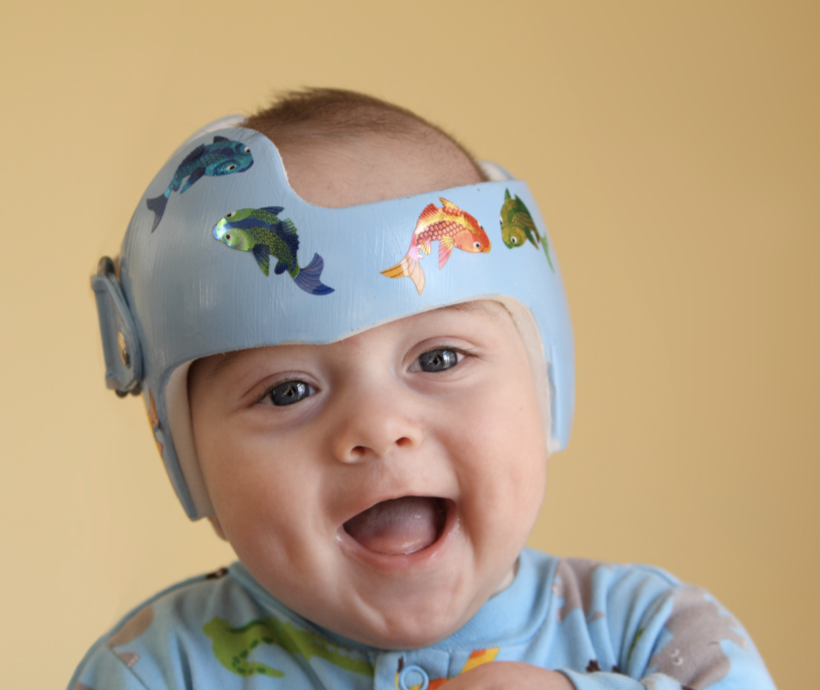
Hopefully, if you live in Scottsdale, Deer Valley or Tempe, AZ, you'll know to choose us as your child's pediatric therapist so your child will have outcomes similar to our other patients: preventing a DOC band, which is an expensive intervention both in terms of appointment frequency during work hours, and cost of the product. However, if they do end up needing a helmet, look at how incredibly adorable they are!
P.S. You can read our blog on plagiocephaly here.