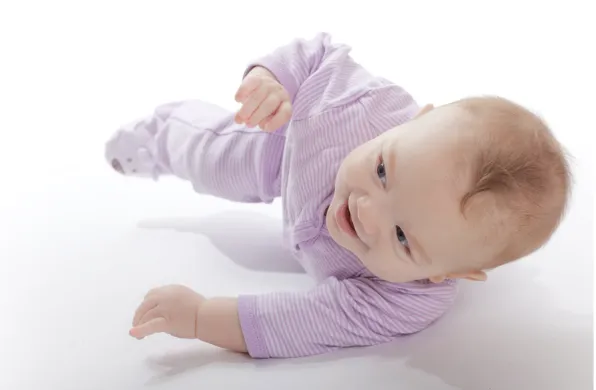
When Should My Baby Roll Over? A Scottsdale Pediatric Physical Therapist Explains
You've been doing tummy time, bought the high-contrast toys, subscribed to Lovevery and maybe even watched Instagram reels of babies rolling over. Then a friend's baby, who happens to be younger than yours, rolls for the first time, and suddenly you're wondering:
"When should my baby roll over?"
If you're a parent in Scottsdale, Paradise Valley, Arcadia, North Phoenix, Biltmore, McCormick Ranch, Gainey Ranch, or the surrounding communities, you're not alone. This is one of the most common questions we hear at our pediatric physical therapy clinic.
Most babies begin rolling between 3 and 6 months, usually from tummy to back before figuring out back to tummy. Understanding what to look for, and when it might be helpful to seek guidance, can make this milestone much less stressful.
When Do Babies Roll Over?
Most babies first learn to roll from their tummy to their back, followed by rolling from their back to their tummy.
One of the biggest misconceptions we hear is, "My baby rolled once, so we don't need to practice anymore."
In reality, many babies accidentally roll once and then don't do it again for several weeks, leaving parents wondering if they missed something. We consider the milestone established when your baby can intentionally roll from tummy to back and back to tummy, repeatedly, to both the right and left without a strong preference.
Signs Your Baby Is Getting Ready to Roll
Rolling doesn't happen overnight. Before babies roll independently, you'll often notice them:
Lifting their head higher during tummy time, pushing up onto straight arms, reaching across their body, grabbing their feet, rocking from side to side, twisting through their torso, rolling onto one side, showing interest in toys just out of reach
These are all encouraging signs that the strength, coordination, and body awareness needed for rolling are developing.
What If My Baby Isn't Rolling Yet?
Instead of focusing on one milestone, look for overall progress:
Are they getting stronger? Are they tolerating tummy time longer? Are they reaching farther? Are they exploring movement more than they were a few weeks ago?
If you aren't seeing improvement over several weeks despite practicing at home, it may be time to schedule a pediatric physical therapy evaluation.
How Can I Help My Baby Learn to Roll?
One of the biggest reasons babies struggle with rolling isn't because something is wrong... it's because they simply don't get enough opportunities to practice. One question we often ask parents is:
How much time does your baby spend in containers like these? Car seats, swings, bouncers, activity centers, jumpers and walkers.
If you want your baby to master motor milestones, place them on the floor.

What If My Baby Only Rolls One Direction?
Sometimes changing your baby's position on the floor or placing toys on the opposite side encourages them to practice both directions.
However, if your baby consistently rolls only one way after several weeks of practice, it may indicate an underlying asymmetry. A pediatric physical therapist can evaluate whether muscle tightness, weakness, or movement preferences are contributing to the pattern.
When Should Parents in Scottsdale Seek Help?
You don't have to wait until your baby has a significant delay before asking questions.
Consider scheduling an evaluation if your baby:
Isn't attempting to roll by around five months
Only rolls one direction after weeks of practice
Consistently looks to one side
Seems unusually stiff or floppy
Frequently keeps one hand fisted
Struggles during tummy time
Many families from Scottsdale, Paradise Valley, Arcadia, North Phoenix, Biltmore, McCormick Ranch, and Gainey Ranch come to us simply looking for reassurance.
Many parents have left with more reassurance and confidence. In fact, we've had many ask, "How did you do that?! Our baby has never tolerated tummy time like that before."
Often, a few small changes to positioning, handling, or play activities make a tremendous difference in how enjoyable and productive tummy time can be!

Why Rolling Matters
What many parents don't realize is rolling is much more than simply getting from one place to another.
This milestone teaches babies how to:
Transfer weight
Rotate through their trunk
Coordinate both sides of their body
Develop core strength
Improve balance
Prepare for sitting and crawling
Each developmental milestone builds upon the one before it. Building a strong foundation early helps support future movement skills and gives babies more opportunities to safely explore their environment. Physical development is also highly correlated to other developmental milestones. If you'd like to learn more about their interconnectedness, click here.
How Pediatric Physical Therapy Can Help
Many parents assume they need to wait until their baby is significantly delayed before seeking pediatric physical therapy, and it is truly heartbreaking to hear time after time that they were advised to "wait and see" or worried they were overreacting, because they lacked social support.
In reality, early guidance is often much easier than catching up later. Sometimes a few small changes to positioning, play, or handling at home make a tremendous difference, helping parents feel more confident and babies move more comfortably.
At Moving & Grooving Pediatric Physical Therapy, we help families throughout Scottsdale, Paradise Valley, Arcadia, Biltmore, North Phoenix, McCormick Ranch, Gainey Ranch, and nearby communities better understand their baby's development.
During an evaluation, we'll observe how your baby moves and interacts with their environment while assessing strength, flexibility, muscle tone, balance, coordination, symmetry, posture, movement quality, and developmental milestones.
Frequently Asked Questions
Can babies skip rolling?
Rarely. Rolling is an important building block for later motor skills like sitting, crawling, and transitioning between positions. If your baby isn't showing interest in rolling, it's worth discussing with your pediatrician or a pediatric physical therapist.
Is rolling early a sign my baby is advanced?
Not necessarily. Some babies roll early because of their body proportions or momentum, while others roll later and still reach future milestones on time.
My baby hates tummy time. Will they still learn to roll?
Possibly, but tummy time helps develop many of the muscles needed for rolling. If tummy time is challenging, find reassuring is that a pediatric physical therapist can recommend simple modifications that make it more enjoyable for both you and your baby.

Where can I find pediatric physical therapy for delayed rolling in Scottsdale?
If your baby isn't rolling, favors one side, seems stiff, or you'd simply like reassurance, Moving & Grooving Pediatric Physical Therapy provides infant developmental evaluations for families throughout Scottsdale and the surrounding communities. Our clinic is conveniently located in McCormick Ranch near Via de Ventura, Hayden Road, and Loop 101.
Do I need a referral for pediatric physical therapy in Arizona?
No. Arizona is a direct access state, allowing families to schedule a pediatric physical therapy evaluation without first obtaining a physician referral.
Should I wait until my baby is delayed?
No. If you're not sure what to change at home, waiting usually result in immediate change. Many families schedule an evaluation because they have questions or simply want reassurance that development is progressing appropriately.
Addressing concerns early often prevents small issues from becoming larger ones, gives parents confidence in supporting their baby's development at home, and prevents your baby from becoming frustrated.
If you'd like guidance before scheduling an evaluation, explore our free Confident Beginnings resources for simple activities, milestone education, and practical tips you can start using today.
Or, you can also send us a text or email with a photo or video of your baby to better express your concerns, and we'll let you know what we suggest during a free consultation: 480-269-0173.
