
Different Ways Babies Crawl
Why is my baby crawling with one leg out? Is it bad if my baby drags one leg when crawling? Why won't my baby put their knees down when crawling?
Are you a parent in Scottsdale wondering, “why are there so many different types of crawling?" You're in the right place!
Crawling is a foundational skill that, if not completed symmetrically, can impact future developmental milestones, especially gross motor milestones like walking, running and jumping. If you’re noticing your baby is not able to crawl (or move in general) symmetrically, seeking professional guidance from a pediatric physical therapist is highly recommended.

Sometimes, babies don’t crawl symmetrically because they are lacking body awareness, have stiffness or tightness, or weakness. Maybe they’ve already had asymmetries developing, such as torticollis, which has already pre conditioned their body to prefer one side. Several parents have said “I think they crawl on their hands and feet because it hurts their knees.” Although possible, it is worth mentioning that babies do not have true, bony knee caps that develop until after 2 years old.
A baby who hitch crawls may not have the confidence or strength to step up into a standing position, step over an obstacle, or use a step with the leg that is underneath the body (in the typical position). They may walk with a limp or have more loss of balance on one leg than the other.
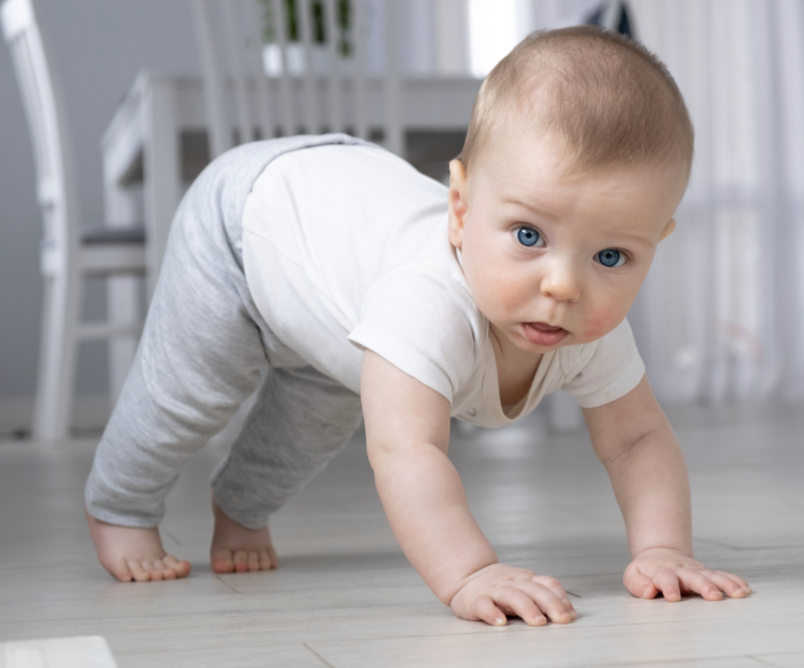
Crawling asymmetrically could lead to problems with spinal column alignment (scoliosis), possibly standing with one hip or shoulder lower than the other or a head tilt (torticollis). This causes unnecessary strain on certain muscles, while others start to atrophy, or decondition and waste away. This eventually leads to more episodes of pain due to overuse and underuse not matching equally.
Their hip sockets could develop asymmetrically, increasing their risk of hip dysplasia. The interventions for hip dysplasia include a pavlik harness, casting, and immobilizing. This lost time for them to practice trying and failing, and fine tuning their mobility can lead to additional delays (beyond physical/ motor milestones), as it limits their interactions with peers and the world around them.
How can I help my baby crawl 'normal'?
As you've probably learned by now, telling your baby to stop crawling that way isn't sufficient. The more babies practice a habit, the more it becomes permanent. Most of the time, hands on intervention is the only way to improve the way your baby is crawling. Asymmetrical crawling is treated by a pediatric physical therapist or pediatric occupational therapist, and the interventions include strengthening muscles that are weak, stretching muscles that are tight, retraining movement patterns, improving brain-body connection, and focusing on stability over mobility.
If you want to learn more about hitch crawling, be sure to check out our other blog here!
