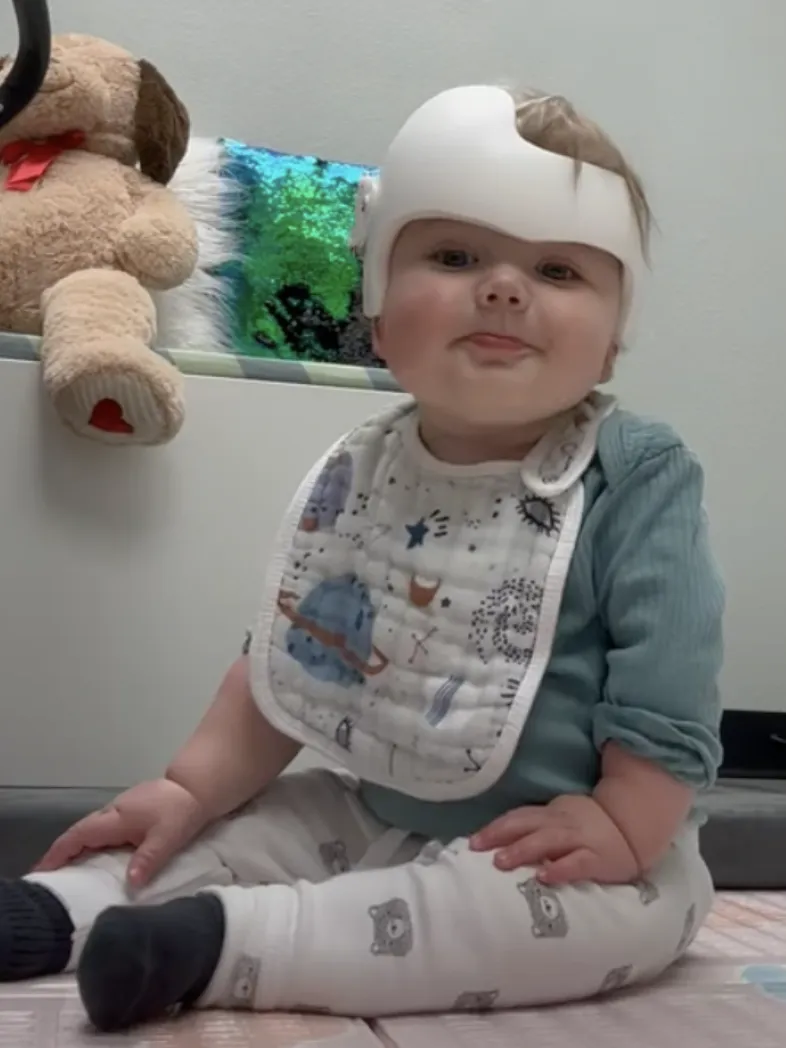
Flat Head Syndrome (Plagiocephaly) Treatment in Scottsdale, AZ | \Pediatric Physical Therapy
Is Your Baby's Flat Head Normal? Understanding Plagiocephaly and When to Seek Help
Many parents wonder whether it's something their baby will outgrow, if a helmet will be needed, or if pediatric physical therapy can help.
In this guide, we'll explain what plagiocephaly is, what causes it, when to seek help, and how pediatric physical therapy can help babies throughout the Scottsdale area move and develop more symmetrically.
At Moving & Grooving Pediatric Physical Therapy, we work with families throughout Scottsdale, Paradise Valley, McCormick Ranch, Gainey Ranch, Arcadia, Biltmore, North Scottsdale, Fountain Hills, and nearby communities who have these same questions. The good news is that positional plagiocephaly (flat head syndrome) is common, and when it's recognized early, there are effective treatment options that can improve your baby's head shape while supporting healthy motor development.
Quick answers
Many babies with plagiocephaly improve without a helmet, especially if it's identified early.
Mild flattening often responds to repositioning, tummy time, and addressing torticollis if present.
Moderate or severe flattening should be evaluated because the earlier treatment begins, the more options are available.

What Is Plagiocephaly?
First things first: how do I pronounce plagiocephaly? Plagiocephaly is pronounced: play-jee-oh-SEF-uh-lee.
Parents often notice:
A flat spot on the back or one side of the head
One ear positioned slightly farther forward than the other
An uneven forehead
Facial asymmetry
A preference for turning the head to one side
Positional plagiocephaly develops from external pressure on the skull. This is different from craniosynostosis, a rare condition in which the bones of the skull fuse together too early and requires prompt medical evaluation.
What Causes Plagiocephaly?
Several factors can contribute to positional plagiocephaly. Often, it's a combination of factors rather than a single cause.
Torticollis
Positional Preference
Limited Tummy Time
Prematurity
Sharing the Womb
Low Muscle Tone
Is Plagiocephaly Really "Just Cosmetic"?
One of the most common misconceptions about plagiocephaly is that it's "just cosmetic."
The flattening itself may lead to long-term asymmetry of the head and face if left untreated. Depending on the severity, children may continue to have:
Uneven facial features
Difficulty with the fit of glasses, bike helmets, sports helmets, or hearing devices
Jaw or bite asymmetry
Many babies with plagiocephaly also have torticollis, limited neck mobility, or delays in early motor skills. If these concerns aren't identified, babies may continue developing asymmetrical (uneven) movement patterns that can affect future milestones.
Why Early Intervention Matters
A baby's skull grows more during the first year of life than at any other time. That rapid growth creates an important window for improving head shape and addressing the factors contributing to plagiocephaly. For some babies, simple repositioning strategies and increased tummy time may be enough.
Research has also found that babies with plagiocephaly are more likely to have developmental concerns than babies without plagiocephaly.
The earlier concerns are identified, the more treatment options are typically available.
When Should You Seek Professional Help?
In Arizona, you do not need a physician referral to schedule an evaluation with a licensed pediatric physical therapist. Many families from Scottsdale, Paradise Valley, McCormick Ranch, Gainey Ranch, Arcadia, Biltmore, and surrounding communities appreciate being able to seek answers sooner rather than waiting for another medical appointment. Early evaluation often means more conservative treatment options, fewer therapy visits overall, and the opportunity to address concerns before they become more significant.
Consider scheduling a pediatric physical therapy evaluation if your baby:
Consistently prefers looking to one side
Has difficulty turning their head equally in both directions
Has a flat spot that continues to worsen
Has noticeable facial asymmetry or one ear positioned farther forward
Struggles with tummy time
Is delayed in rolling or other early motor milestones
Was born prematurely or spent time in the NICU
If you're unsure whether your baby's head shape is improving as expected, it's always appropriate to ask. You can even send us a picture or video for a free consultation if you're on the fence, and we'll get back to you with our recommendations! 480-269-0173 or [email protected] are the best ways to reach us.
What Can Parents Do at Home?
There are several things parents can do to help reduce pressure on the flattened area of the head while encouraging symmetrical movement and development.
Prioritize Tummy Time

Encourage Your Baby to Look Both Directions
Reduce Time in Containers
Car seats, swings, bouncers, and infant seats were created to keep babies safe while you are unable to hold them, but spending extended periods in these positions can increase pressure on the same area of the skull. One thing you can do today is start monitoring if your baby's head tilts or turns in one direction when they fall asleep in the car seat or swing.
Continue Following Safe Sleep Guidelines
Is Repositioning Alone Enough to Correct my Baby's Plagiocephaly?
If your baby has torticollis, limited neck mobility, or a strong head-turning preference, simply changing positions may not be enough to improve head shape or prevent the flattening from progressing.
That's why identifying the underlying cause is so important.
How Can Pediatric Physical Therapy Help?
The importance of finding a pediatric physical therapist for this condition (as opposed to one at a standard outpatient clinic) is that they will also show you how to incorporate play into your baby's treatment.
During an evaluation, your baby's pediatric physical therapist will assess your baby's neck mobility, muscle strength, movement patterns, head-turning preferences, gross motor development, and head shape.
Because no one teaches you how to 'do tummy time,' I hear during nearly every evaluation 'Oh... I guess we need to get more toys,' or 'I didn't even think about using that toy that way,' or 'I had no idea you were supposed to use [it] this way.'
Many marketed 'baby toys' are either too large or heavy for a young baby to use effectively, so ensuring you have toys that are appropriate for the first few months of life can be a game changer.
Will My Baby Need a Helmet?
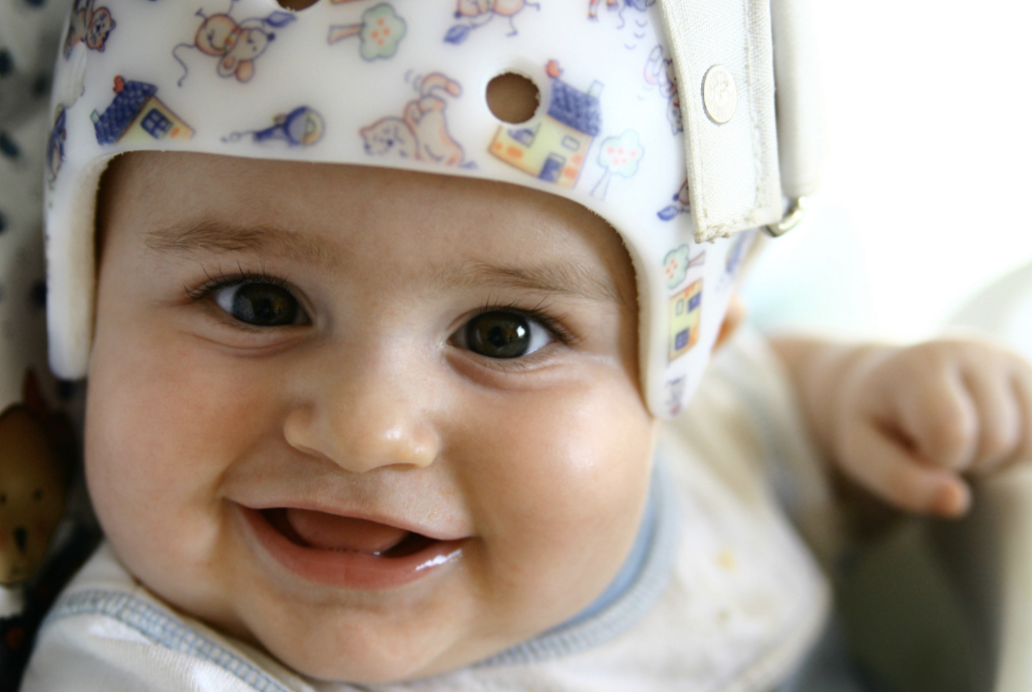
One of the first questions I get asked is whether their baby will need a helmet (also known as a DOC band).
The answer depends on several factors, including your baby's age, the severity of the head flattening, whether the head shape is improving over time, their strength and mobility, and whether conservative treatment has been successful. One local resource that performs free 360- degree imaging is Cranial Technologies, but you can also ask your physical therapist for their assessment.
Physical therapy often continues alongside helmet treatment to address the underlying movement patterns that contributed to the plagiocephaly in the first place.
Additional Questions Scottsdale Parents Ask
Can my baby see a pediatric physical therapist without a referral in Arizona?
Yes. Arizona is a direct access state, which means you can schedule a pediatric physical therapy evaluation without first obtaining a physician referral.
Where can I have my baby's flat head evaluated in Scottsdale?
A pediatric physical therapist can evaluate your baby's head shape. Moving and Grooving PT specializes in infant development; we would love to support you when you're wondering if intervention is necessary.
Can physical therapy help my baby avoid a helmet?
Every baby is different, and helmet therapy is the best treatment for some infants with moderate or severe plagiocephaly.
Early treatment may improve head shape with conservative care alone for some babies, while helping others achieve better outcomes if a helmet is later recommended.

What areas do you serve?
Moving & Grooving Pediatric Physical Therapy proudly serves families throughout Scottsdale, Paradise Valley, McCormick Ranch, Gainey Ranch, Arcadia, Biltmore, North Scottsdale, Fountain Hills, and nearby communities.
When Should You Schedule a Pediatric Physical Therapy Evaluation?
The most important step is identifying why the plagiocephaly developed.
If you have concerns about your baby's head shape or development, don't wait until the next milestone passes. An early evaluation can provide reassurance, answer your questions, and help determine the most appropriate next steps for your child.
Most parents tell us the hardest part was feeling like 'they were overreacting,' and didn't have support from their pediatrician or other family members in seeking treatment. By the time they listen to their gut, more visits and intervention are usually required. A pediatric physical therapy evaluation can answer that question.
If you're in Scottsdale or the surrounding communities and would like to learn more, the team at Moving & Grooving Pediatric Physical Therapy is here to help.
Families We Serve
Moving & Grooving Pediatric Physical Therapy proudly serves families from:
Scottsdale
McCormick Ranch
Gainey Ranch
Paradise Valley
Arcadia
Biltmore
North Scottsdale
Central Scottsdale
Shea Corridor
North Phoenix
Fountain Hills
Why Scottsdale Families Choose Pediatric Physical Therapy Early
At Moving & Grooving Pediatric Physical Therapy in Scottsdale, we believe that early evaluation leads to better outcomes (which is also supported in the research). Often times, a helmet can be avoided if you seek early intervention.
We proudly help families from Scottsdale, Paradise Valley, McCormick Ranch, Gainey Ranch, Arcadia, Biltmore, North Scottsdale, Fountain Hills, and nearby communities feel confident they're taking the right next step for their baby's development.
Schedule a Plagiocephaly Evaluation in Scottsdale
If you've noticed a flat spot on your baby's head, a preference for turning one direction, or concerns about tummy time, early evaluation can make treatment simpler and more effective.
Our pediatric physical therapists work with infants and young children throughout Scottsdale, Paradise Valley, McCormick Ranch, Gainey Ranch, Arcadia, Biltmore, Fountain Hills, and nearby communities to improve head shape, treat torticollis, and support healthy motor development.
Our clinic is conveniently located at:
8603 E Royal Palm Rd #120
Scottsdale, AZ 85258
Which is at the intersection of Via de Ventura and Hayden, across from the shopping center and near Talking Stick Resort.
And our office hours are 8-5, Monday- Friday. Schedule an evaluation today to start early intervention.
References
American Academy of Pediatrics
Cleveland Clinic
American Physical Therapy Association (APTA)
National Institutes of Health (NIH)
American Academy of Pediatrics Clinical Report on Positional Skull Deformities
